
Fire Safety in Industrial Construction: The Role of Advanced Materials
In an industrial environment—where chemicals, high-voltage electricity, and heavy machinery coexist—fire safety is not just a regulatory requirement; it is a business necessity. A single fire incident can lead to total loss of inventory, structural collapse, and, most tragically, loss of life.
While fire extinguishers and sprinkler systems are essential, true fire safety starts with the passive fire protection built into the walls and roof of your facility.
1. The Danger of Combustible Insulation
Historically, many industrial buildings used cheap polystyrene (thermocol) or low-grade foam insulation. These materials are highly flammable and act as “fuel” during a fire, producing thick, toxic black smoke that makes evacuation impossible.
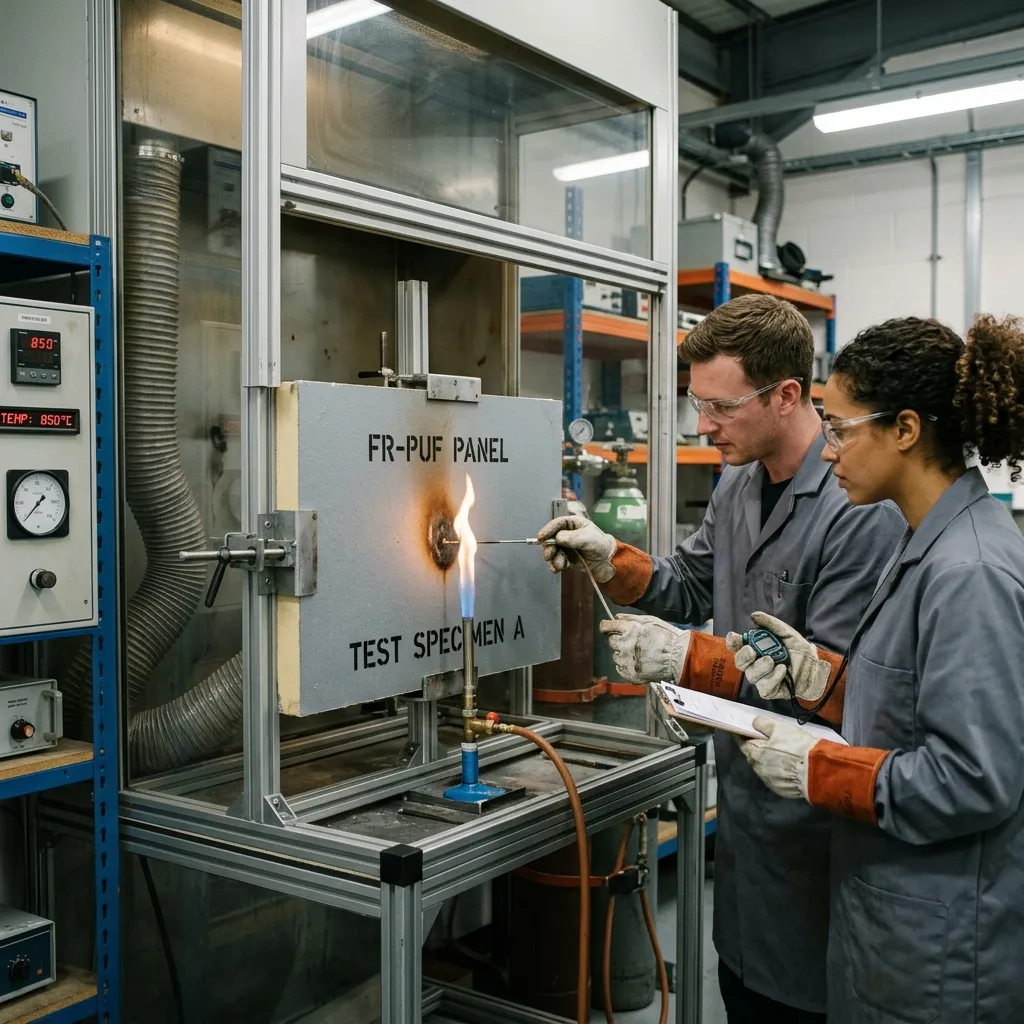
The Solution: Switch to FR-grade PUF (Polyurethane Foam) or PIR (Polyisocyanurate) panels.
2. Why PIR Panels are the Safety Standard
PIR is an advanced version of PUF. When exposed to flame, PIR forms a protective “char” layer on its surface. This char acts as a barrier, preventing the fire from reaching the core of the panel and significantly slowing down the spread of flames.
At Apex Metals, our fire-rated panels are designed to:
- Be Self-Extinguishing: The flame goes out as soon as the heat source is removed.
- Produce Low Smoke: Reducing the risk of asphyxiation during evacuation.
- Maintain Structural Integrity: Keeping the roof from collapsing for a longer period.
3. The Non-Combustibility of Steel
The external skins of your building—the roofing and wall cladding—should always be high-quality steel. Unlike plastic or wooden structures, steel is Class A non-combustible. It provides a robust shield that prevents external fires (like a nearby forest fire or a neighbor’s warehouse fire) from entering your building.
4. Strategic Fire Walls
In large warehouses, fire safety can be improved by installing “Fire Walls” using mineral wool (Stone Wool) sandwich panels. Mineral wool has a melting point above 1,000°C and can provide a 2-hour fire rating, effectively compartmentalizing the building and stopping a fire from spreading from one section to another.
5. Proper Sealants and Accessories
A fire can travel through even the smallest gaps in the roof or walls. Using fire-rated silicone sealants and fire-stopping materials at wall-to-roof junctions is a critical but often overlooked step in industrial design.
Fire Safety Statistics
Industrial fires in India caused an estimated loss of ₹20,000 crore in 2024 across manufacturing, warehousing, and chemical processing sectors (source: NFPA India, 2025 Annual Fire Loss Report). According to the Fire Protection Association of India, 65% of industrial fire fatalities in the past five years occurred in buildings without fire-rated insulation materials. Properly specified fire-rated PUF panels can provide up to 60 minutes of fire resistance, significantly exceeding the 30-minute minimum required by the National Building Code of India 2016 for industrial occupancies.
Your Partner in Safe Construction
At Apex Metals, we don’t just sell metal; we provide engineered safety solutions. Our technical team can help you select the right fire-rated materials to meet local fire department norms and international insurance requirements.
Is your facility fire-safe? Consult with our safety experts today →
Technical Frequently Asked Questions
Are all PUF panels fireproof?
No. Standard PUF panels are combustible. For fire safety, you must specify 'Fire Retardant' (FR) grade or PIR (Polyisocyanurate) panels, which have higher thermal stability and char-forming properties that slow down fire spread.
What is the difference between Fire-Resistant and Fire-Retardant?
Fire-retardant materials are designed to slow the spread of a fire. Fire-resistant materials can withstand fire for a specific period (e.g., 1 hour, 2 hours) without losing structural integrity.
Does metal roofing provide fire protection?
Steel is non-combustible and has a Class A fire rating. It will not ignite or spread flames. However, the insulation and sealants used with the roof must also be carefully selected for total system safety.
Ready to Optimize Your Industrial Infrastructure?
Our technical experts specialize in creating customized steel and roofing solutions tailored to your project's unique requirements.