
PEB vs Conventional Construction: Cost, Time & Quality Comparison
When planning an industrial building in India, one of the first decisions you’ll face is whether to use pre-engineered building (PEB) technology or conventional steel construction. Both approaches have their merits, and the right choice depends on your project’s specific requirements, budget, and timeline.
What is a Pre-Engineered Building (PEB)?
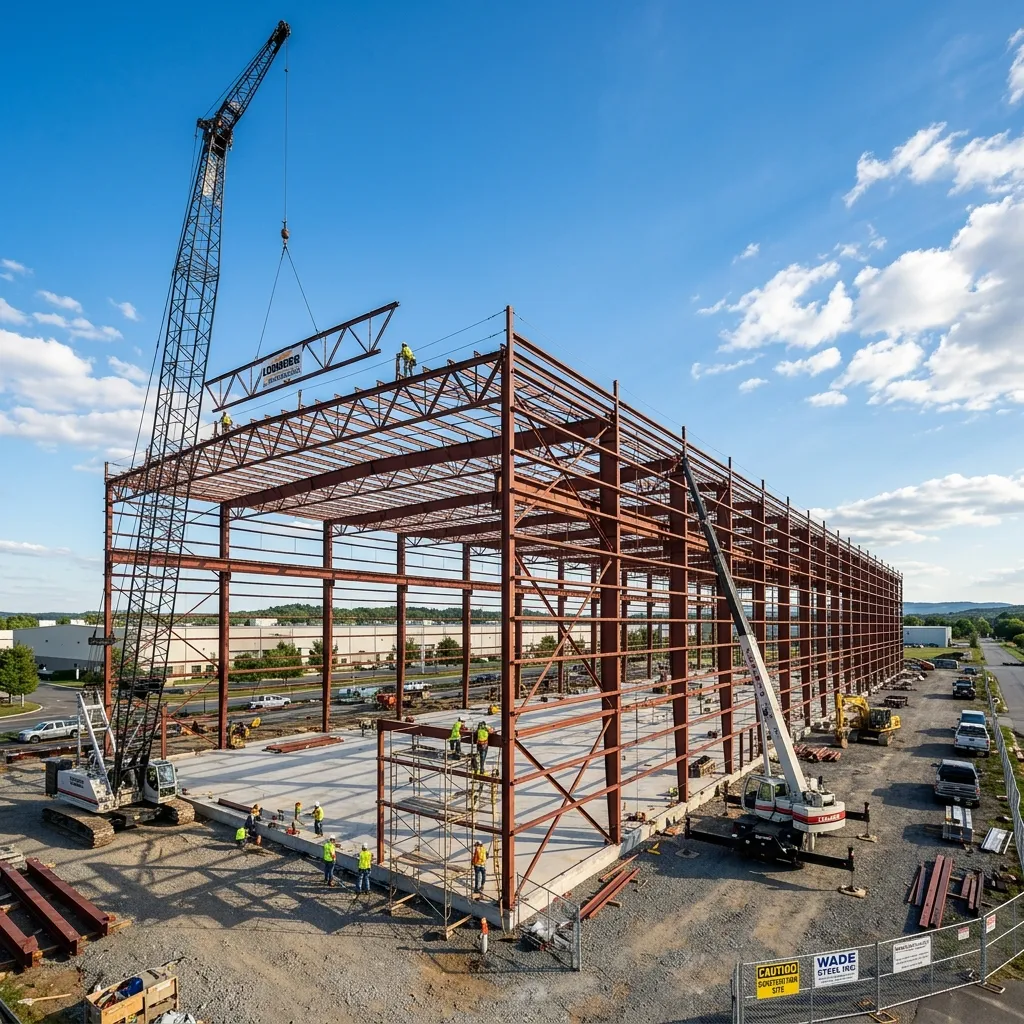
A PEB is a building system manufactured entirely in a factory and assembled on-site using bolted connections. The structural components — primary frames (rafters and columns), secondary members (purlins and girts), bracing, and cladding — are designed using computer software and fabricated with precision.
What is Conventional Steel Construction?
Conventional steel construction involves designing and fabricating custom steel sections (hot-rolled beams, columns) specifically for each project. Components are typically welded or bolted on-site, requiring more skilled labor and longer erection times.
Cost Comparison
Initial Material Cost
| Factor | PEB | Conventional |
|---|---|---|
| Steel weight | 15-25% lighter due to optimized tapered sections | Heavier hot-rolled sections |
| Material cost per kg | Higher per-kg rate for built-up sections | Lower per-kg rate for standard sections |
| Total material cost | 10-20% lower overall | 10-20% higher due to excess steel |
| Foundation cost | 15-25% lower (lighter structure) | Heavier foundations required |
Total Project Cost Comparison
For a typical 20,000 sq ft industrial warehouse:
| Cost Element | PEB | Conventional |
|---|---|---|
| Structural steel | ₹30-35 lakhs | ₹38-45 lakhs |
| Foundation | ₹8-10 lakhs | ₹10-13 lakhs |
| Cladding & roofing | ₹12-15 lakhs | ₹12-15 lakhs |
| Erection labor | ₹4-6 lakhs | ₹7-10 lakhs |
| Total | ₹54-66 lakhs | ₹67-83 lakhs |
PEB savings: 15-25% on total project cost
Timeline Comparison
| Phase | PEB | Conventional |
|---|---|---|
| Design & engineering | 2-3 weeks | 3-5 weeks |
| Material procurement | 1-2 weeks | 3-6 weeks |
| Fabrication | 3-4 weeks | 4-8 weeks |
| Foundation (site prep) | 2-3 weeks | 3-4 weeks |
| Erection | 2-3 weeks | 4-6 weeks |
| Total | 10-15 weeks | 17-29 weeks |
PEB time savings: 30-50% faster project completion
Quality and Performance
Advantages of PEB
- Factory-controlled quality: All components manufactured indoors under controlled conditions
- Consistent tolerances: CNC-controlled fabrication ensures precise fit
- Bolted connections: Easier to inspect and maintain than welded joints
- Design flexibility: Clear spans up to 90 meters without interior columns
- Future expansion: Bolted system allows easy end-to-end or side extensions
Advantages of Conventional
- Heavy load handling: Better suited for overhead cranes above 20-ton capacity
- Architectural freedom: Easier to create unique building forms
- Local repair: Any steel fabricator can modify or repair conventional structures
- No dependency on single manufacturer: Can source from multiple fabricators
When to Choose PEB
PEB is the better choice when:
- You need large clear spans (20m to 90m) without internal columns
- Time to completion is critical
- The building is a standard geometry (rectangular, single or multi-span)
- You want to minimize total project cost
- Future expansion is planned
- The project is a warehouse, factory, or logistics hub
When to Choose Conventional
Conventional construction is preferred when:
- The building requires heavy overhead crane systems (20-ton+)
- Architectural complexity is high (curved roofs, unusual geometries)
- The structure has multiple levels and mezzanines
- You need locally available fabrication and repair
- Project size is very small (under 3,000 sq ft)
Final Recommendation
For 80% of industrial projects in India — warehouses, factories, cold storage, and logistics hubs — PEB technology offers the best balance of cost, speed, and performance. The lighter steel sections also mean reduced foundation costs, which is a significant advantage in regions with poor soil conditions.
However, always have your project evaluated by a qualified structural engineer before deciding. Apex Metals supplies structural steel for both PEB and conventional projects, and our technical team can connect you with experienced PEB designers and erectors in your region.
Technical Frequently Asked Questions
Is PEB cheaper than conventional construction?
For spans above 20 meters and areas above 5,000 sq ft, PEB (pre-engineered buildings) are typically 15-30% cheaper than conventional steel construction. The savings come from optimized steel usage (lighter sections), faster fabrication, and reduced erection time. For smaller structures, the design cost of PEB may offset the savings.
How much faster is PEB construction?
A pre-engineered building can be erected 30-50% faster than conventional steel construction. An average 20,000 sq ft warehouse can be completed in 8-10 weeks with PEB vs 14-18 weeks with conventional methods. This time saving translates directly to earlier project commissioning and faster ROI.
Can PEB buildings be expanded in the future?
Yes. One of the advantages of PEB design is future expandability. The bolted connection system allows for easy end-to-end or side extensions without major structural modifications. This is more difficult with conventional welded steel structures, which require cutting and re-welding for expansion.
Which is better for large industrial projects — PEB or conventional?
For large industrial projects (warehouses, factories, hangars, exhibition halls), PEB offers clear advantages in cost, speed, and design flexibility. However, projects requiring heavy overhead cranes (20-ton+), unusual architectural forms, or extreme load-bearing may still be better suited to conventional steel or concrete construction.
Ready to Optimize Your Industrial Infrastructure?
Our technical experts specialize in creating customized steel and roofing solutions tailored to your project's unique requirements.