
Solar-Ready Roofing: Preparing Your Facility for the Future
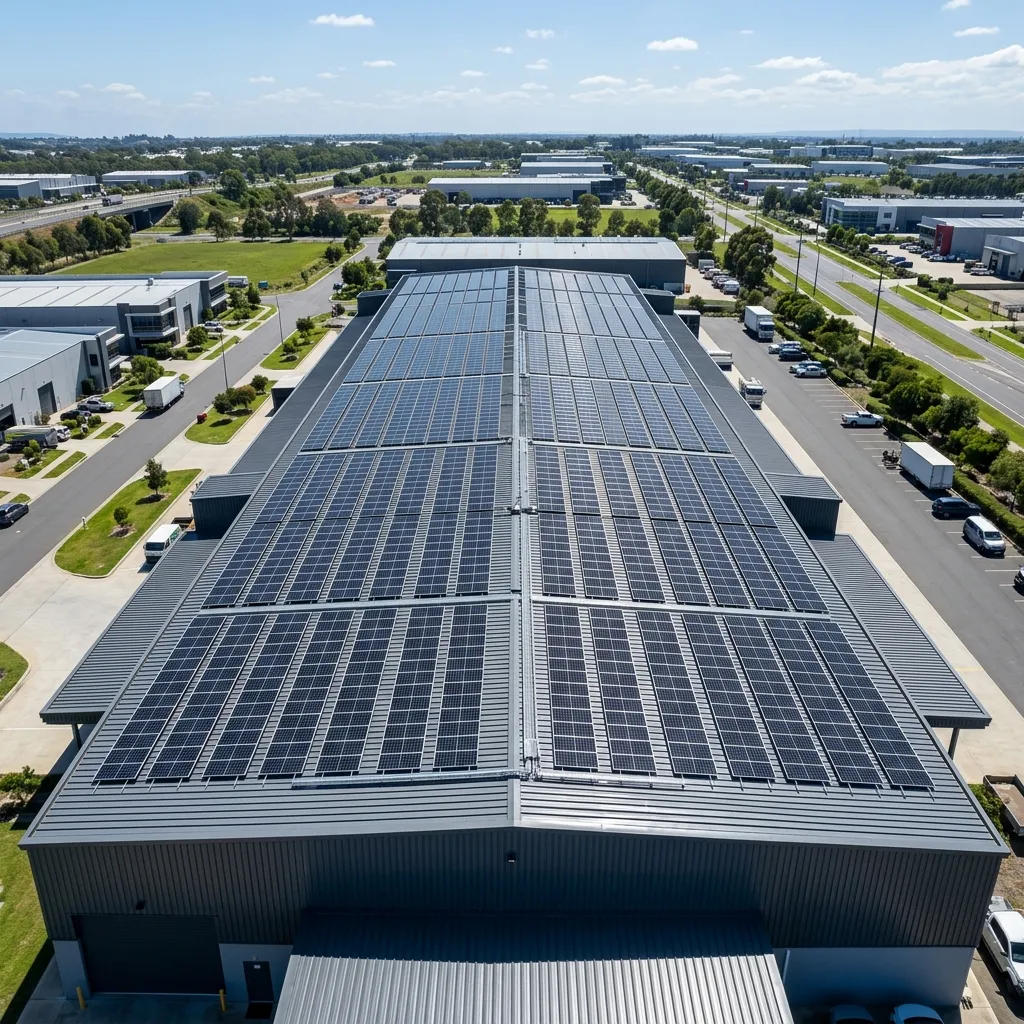
With rising electricity costs and government incentives for renewable energy, thousands of Indian industries are turning their vast rooftops into power plants. But before you call a solar installer, you need to ask: Is your roof ready?
Installing solar panels on an unsuitable roof can lead to structural failure, persistent leaks, and voided warranties. Here is how to ensure your roof is “solar-ready.”
1. Choose the Right Material: Galvalume is King
Solar panels have a lifespan of 25+ years. Your roofing material must match or exceed this. Standard galvanized (GI) sheets may rust within 10-15 years, forcing you to dismantle the entire solar array to replace the roof—a massive and unnecessary expense.
According to the Solar Energy Corporation of India, rooftop solar capacity is expected to reach 40 GW by 2030, up from approximately 8 GW in 2025. The roofing material under those panels needs to last as long as the solar investment — which means Galvalume with AZ150+ coating is the baseline recommendation.
Recommendation: Always use High-Tensile Galvalume (AZ150) with a minimum 0.47mm base metal thickness. It offers the corrosion resistance required to last as long as your solar panels — typically 25+ years — without requiring mid-life roof replacement.
Avoid GI sheets for solar-ready roofs. GI’s 10-15 year lifespan means you will need to remove and re-install the entire solar array to replace the roof — costing roughly 15-20% of the original solar investment in additional labor and re-commissioning.
2. Profile Matters: Standing Seam vs. Trapezoidal
The way panels are attached to the roof is critical.
- Standing Seam Profiles: These are the gold standard for solar. Panels are attached using non-penetrative clamps that grip the raised ribs of the metal. No holes are drilled, meaning there is zero risk of leaks.
- Trapezoidal (Ribbed) Profiles: These are very common. Panels are attached using mounting rails that are screwed into the purlins. While effective, it requires precise installation and high-quality EPDM gaskets to prevent leaks.
3. Structural Load Capacity
Solar panels add “dead load” to your building (roughly 12-15 kg per square meter). You must ensure that your purlins and columns are designed to handle this extra weight, along with wind uplift forces.
Action: Consult with a structural engineer to verify that your building can support the intended solar capacity. Using thicker 0.50mm or 0.55mm BMT sheets can provide better rigidity for mounting systems.
4. Heat Reflectivity
A cool roof improves solar panel efficiency. When a metal roof becomes excessively hot, the efficiency of the solar cells above it can drop by 0.3-0.5% per degree Celsius above 25°C. In North Indian summers where roof surface temperatures can reach 65-75°C, this translates to a 12-20% reduction in solar panel output.
White or light grey color coated sheets with high SRI (Solar Reflective Index) values can reduce roof surface temperature by 8-12°C compared to dark-colored sheets, directly improving the efficiency of the solar panels mounted above them.
Recommendation: Use Light Grey or White pre-painted sheets from JSW’s Cool Roof series or TATA’s high-SRI color range. These have SRI values above 80, keeping the ambient temperature around the panels lower and maximizing your energy yield by 5-8% compared to standard dark roofs.
5. Accessibility and Maintenance Paths
Once panels are installed, you still need to access the roof for cleaning the panels and maintaining the roof itself.
Action: Design your solar layout with clear “walking paths” between the rows. Ensure these paths align with the underlying purlins to prevent sheet damage.
6. Fire Safety
Solar installations carry a minor risk of electrical fires. If a fire occurs, you want a roof that won’t contribute to the spread.
Recommendation: If your building requires insulation, use PIR or Fire-Rated PUF panels rather than traditional glass wool, which can sag and create air pockets over time.
Make Your Next Roof a Solar-Ready Roof
At Apex Metals, we specialize in providing solar-optimized roofing solutions. From high-tensile standing seam profiles to specialized solar mounting accessories, we help you build a roof that pays for itself.
Solar Economics Summary
| Factor | GI Roof | Galvalume AZ150 Roof |
|---|---|---|
| Roof lifespan | 10-15 years | 25-40 years |
| Needs re-roof during solar life? | Yes (1-2 times) | No |
| Solar decommission/reinstall cost | 15-20% of solar investment | Zero |
| Heat reflectivity | Average | Excellent (cool roof options) |
| Recommended for solar? | No | Yes |
The cost difference between GI and Galvalume is typically recovered within 5-8 years for solar-ready roofs, purely from avoiding future re-roofing costs under the solar array. For new constructions planning solar, specifying Galvalume from the start is the most cost-effective decision.
Thinking of going solar? Get a roofing consultation first →
Technical Frequently Asked Questions
Do I need to drill holes in my roof to install solar panels?
If you use a 'Standing Seam' profile, you can use non-penetrative clamps that attach to the ribs of the sheet, ensuring zero leaks. For trapezoidal sheets, specialized mounting rails with EPDM washers are used to maintain watertight integrity.
Can an old metal roof support the weight of solar panels?
It depends on the gauge of the sheet and the purlin spacing. We recommend a structural audit. If the roof is over 10 years old, it's often better to replace the sheets with solar-ready Galvalume before installation.
How does solar panel heat affect the roofing sheets?
Solar panels actually provide a shading effect, keeping the roof surface cooler. However, ensure there is an air gap (typically 100mm) between the panels and the roof for ventilation.
Ready to Optimize Your Industrial Infrastructure?
Our technical experts specialize in creating customized steel and roofing solutions tailored to your project's unique requirements.