

What Is a PUF Panel? Complete Guide to Polyurethane Foam Insulated Panels
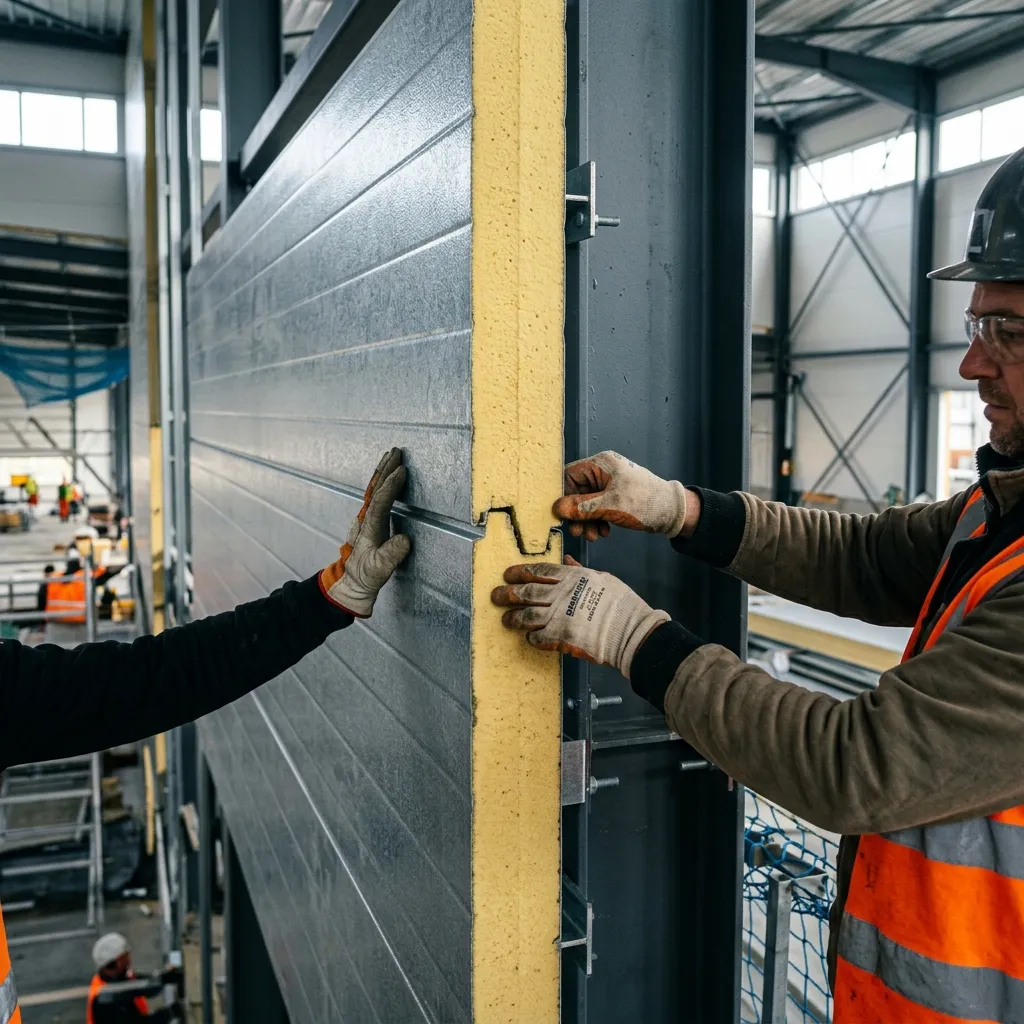
A PUF panel (Polyurethane Foam panel) is a structural insulated panel made of a rigid polyurethane foam core bonded between two metal facing sheets. It serves as both the building envelope and the thermal insulation in a single factory-manufactured component.
How PUF Panels Are Constructed
PUF panels are manufactured through a continuous lamination process:
- Metal facings: Galvalume or color-coated steel sheets (0.40mm to 0.60mm) form the outer and inner surfaces
- Foam core: Liquid polyurethane is injected between the metal sheets, expands, and chemically bonds to the metal
- Curing: The foam hardens into a rigid closed-cell structure within minutes
- Profiling: Panels are cut to length with tongue-and-groove or cam-lock joint profiles
The closed-cell structure of PUF (over 90% closed cells) prevents moisture absorption, unlike mineral wool or fiberglass insulation which can absorb water and lose thermal performance over time.
Thermal Performance Compared to Other Insulation
| Material | Thermal Conductivity (k-value) | Thickness Needed for Same Insulation |
|---|---|---|
| PUF (Polyurethane) | 0.022-0.028 W/mK | 100mm (baseline) |
| EPS (Expanded Polystyrene) | 0.035-0.040 W/mK | 150-180mm |
| Mineral Wool | 0.035-0.045 W/mK | 150-200mm |
| PIR (Polyisocyanurate) | 0.020-0.025 W/mK | 90-110mm |
PUF is roughly twice as efficient as mineral wool, meaning you need half the thickness to achieve the same thermal performance.
Common Applications
- Cold storage and freezer rooms (primary use case — 60% of all PUF panel installations in India)
- Clean rooms for pharmaceutical and electronics manufacturing
- Food processing plants requiring hygienic, temperature-controlled environments
- Industrial buildings needing insulated roofing and wall cladding
- Data centers requiring precise temperature and humidity control
Fire Safety and PUF Panels
Modern PUF panels are available with fire-retardant additives that meet Indian building codes. For enhanced fire safety, specify PIR (polyisocyanurate) core panels which have higher fire resistance and lower smoke generation than standard PUF. Always verify that the panel supplier provides fire test certification for the specific product being supplied.
PUF Panel Pricing (2026 Wholesale)
| Thickness | Standard PUF | Fire-Retardant PUF | PIR Core |
|---|---|---|---|
| 60mm | ₹180-220/sq ft | ₹200-250/sq ft | ₹240-300/sq ft |
| 80mm | ₹220-270/sq ft | ₹250-300/sq ft | ₹290-350/sq ft |
| 100mm | ₹260-320/sq ft | ₹290-360/sq ft | ₹340-420/sq ft |
Cold storage projects typically require 80-120mm panels and represent the highest-volume application for PUF panels in the Indian market.
Technical Frequently Asked Questions
What is a PUF panel?
PUF stands for Polyurethane Foam. A PUF panel is a composite building material consisting of a rigid polyurethane foam core sandwiched between two metal sheets (typically Galvalume steel). The foam is injected under pressure and bonds chemically to the metal, creating a structural insulated panel. PUF has the lowest thermal conductivity (k-value 0.022-0.028 W/mK) of any commonly available insulation material.
What is PUF panel used for?
PUF panels are primarily used for cold storage and freezer rooms (requiring temperature control from -40°C to +8°C), clean rooms, pharmaceutical facilities, food processing plants, and insulated industrial buildings. They serve as both the structural wall/roof element and the thermal insulation in a single component, eliminating the need for separate insulation layers.
How thick should a PUF panel be for cold storage?
For chilled storage (2°C to 8°C), 60-80mm PUF panels are adequate. For frozen storage (-18°C to -25°C), use 100-120mm panels. For blast freezing (-30°C to -40°C), 150mm+ panels are required. In North India where summer temperatures exceed 45°C, move up one thickness grade to account for the higher temperature differential.
How long do PUF panels last?
A properly designed and installed PUF panel system has a service life of 20-30 years. The steel cladding protects the foam core from UV and physical damage. The most common maintenance requirement is re-sealing panel joints every 8-10 years, as sealant degradation is the primary failure point rather than the foam itself.
Ready to Optimize Your Industrial Infrastructure?
Our technical experts specialize in creating customized steel and roofing solutions tailored to your project's unique requirements.