
Choosing the Right Roofing Sheets for Your Industrial Project
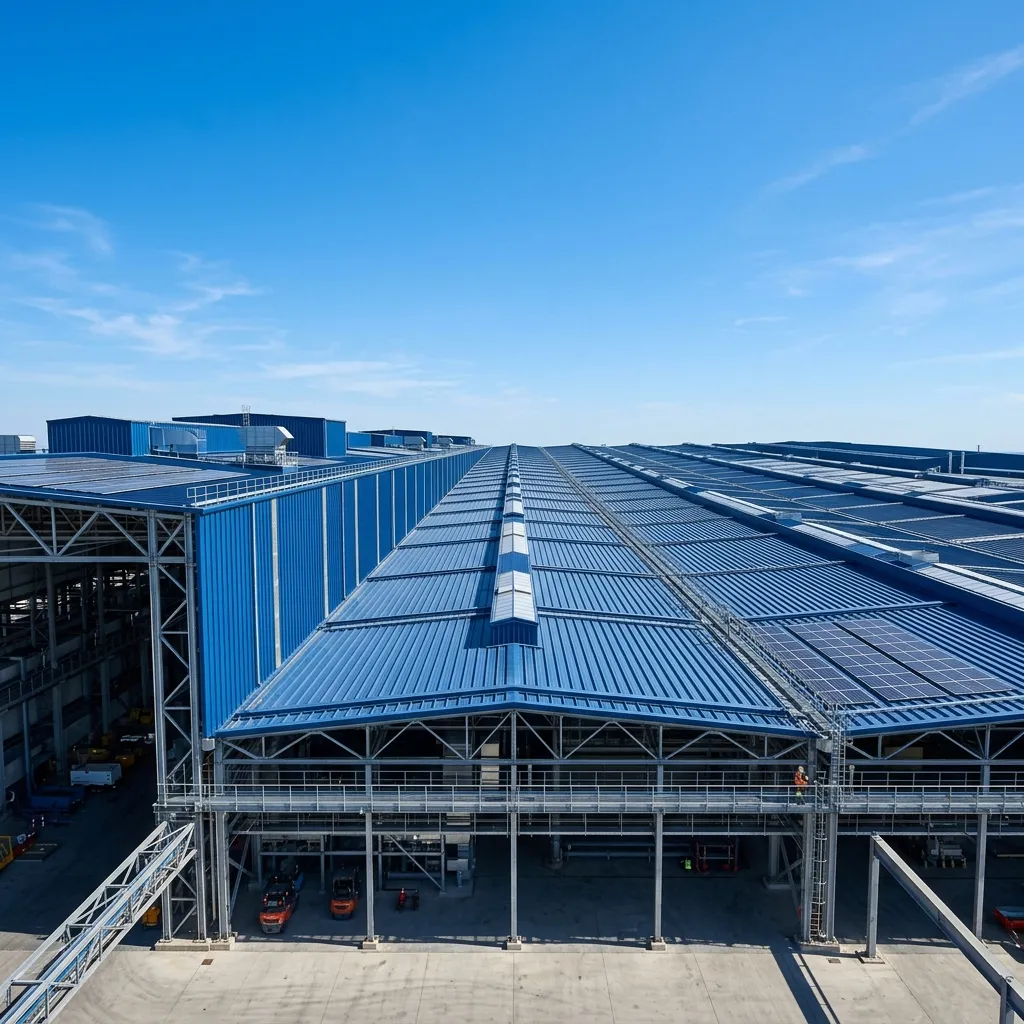
Choosing the right roofing material is one of the most critical decisions in industrial and commercial construction. The roof is your building’s first line of defense against the elements — selecting the wrong material leads to costly maintenance, premature failures, and structural degradation that can compromise your entire investment.
With options ranging from standard color-coated sheets to premium Galvalume and high-performance insulation panels, making an informed choice requires understanding technical specifications, regional climate factors, and long-term performance data.
This guide breaks down everything you need to know.
1. Understanding Material Foundations
The base material (substrate) of your roofing sheet determines its ultimate lifespan and performance ceiling. Most modern sheets are steel-based but differ fundamentally in their protective coating:
Galvanized Steel (GI)
Coated primarily with zinc (typically 60–180 GSM). GI sheets offer basic corrosion protection and are economical for dry-climate applications. However, they are susceptible to corrosion in high-humidity, coastal, or industrial-pollution zones.
- Best for: Dry inland regions, low-pollution environments, short-term structures
- Lifespan: 8–15 years (climate-dependent)
- Coating standard: IS 277 / IS 1079
Galvalume Steel (GL / Aluzinc)
An alloy coating of roughly 55% Aluminum + 45% Zinc. Galvalume provides significantly better corrosion resistance — nearly 2–3× that of standard GI in most environments. The aluminum component also reflects heat effectively, reducing cooling loads.
- Best for: Warehouses, factories, coastal regions, high-temperature zones
- Lifespan: 15–25 years
- Coating standard: IS 15965 / ASTM A792
Pre-Painted (PPGI / PPGL)
GI or GL substrates painted in a controlled factory environment using a coil-coating process. This multi-layer system (primer + topcoat + back coat) provides an additional protective barrier and enables full color customization using RAL color codes.
- PPGI: Pre-Painted Galvanized Iron — economical, good for interior/low-exposure use
- PPGL: Pre-Painted Galvalume — premium, recommended for exterior industrial applications
- Paint systems: Polyester (PE), Silicon Modified Polyester (SMP), PVDF (for extreme environments)
2. Decoding the Specifications — What Numbers Matter
When reviewing a quote from your supplier, these are the critical numbers to verify:
| Parameter | What It Means | Industrial Recommendation |
|---|---|---|
| BMT (Base Metal Thickness) | Steel thickness excluding coating | 0.45mm – 0.60mm for industrial |
| TCT (Total Coated Thickness) | BMT + all coating layers | Confirm BMT, not TCT |
| YST (Yield Strength) | Steel’s load-bearing capacity | 550 MPa (High-tensile) |
| Coating Mass (GSM) | Zinc/Aluzinc weight per sq.m | ≥ AZ150 for exterior industrial |
| Paint Microns | Primer + topcoat thickness | 25+ microns topcoat recommended |
⚠️ Important: Some suppliers quote Total Coated Thickness (TCT) to make sheets appear thicker. Always ask for Base Metal Thickness (BMT) specifically.
3. Climate-Specific Material Selection
India’s diverse climate zones require different material specifications. Here is how to match your material to your geography:
Coastal Regions (High Salinity — Mumbai, Goa, Kerala, Odisha Coast)
Salt-laden air accelerates corrosion dramatically. Standard GI sheets can rust within 2–4 years near the coast.
Recommendations:
- Use GL (Galvalume) with AZ150+ coating as a minimum
- Opt for PVDF painted sheets for maximum color and corrosion retention
- Install all metal fasteners in A2 stainless steel or hot-dip galvanized
Industrial Belts (High Chemical Pollution — Surat, Vapi, Ankleshwar)
Chemical vapors from nearby factories degrade standard polyester paint. The paint blisters, chalks, and eventually allows corrosion to penetrate.
Recommendations:
- PVDF (Polyvinylidene Fluoride) topcoat — chemically inert, UV-stable for 20+ years
- SMP (Silicon Modified Polyester) as a cost-effective middle ground
- Avoid standard PE-coated sheets in highly polluted zones
North India Industrial Hubs (Extreme Temperature Swings — Haryana, Punjab, Rajasthan)
Temperatures ranging from -2°C in winter to 48°C in summer cause significant thermal expansion and contraction. If not properly accounted for, this causes oil-canning (wavy distortions) and fastener loosening.
Recommendations:
- High-tensile (550 MPa YST) sheets resist oil-canning better under thermal stress
- Use 0.5mm+ BMT for improved rigidity
- For inhabited or climate-controlled buildings, always add insulation (glass wool or PUF panels)
- Highly reflective AZ coatings help reduce indoor temperatures by 5–8°C
High Rainfall Zones (Northeast India, Western Ghats, Coastal Maharashtra)
Heavy monsoon rain requires roofing profiles designed for fast water runoff and watertight overlaps.
Recommendations:
- Use deep-ribbed trapezoidal or standing-seam profiles for faster drainage
- Ensure ≥5° roof pitch minimum for corrugated sheets, ≥3° for standing seam
- Apply EPDM/neoprene sealant washers under all fasteners
- Consider pre-painted GL sheets for maximum weather resistance
4. Roofing Profile Types — Choosing the Right Shape
The cross-sectional profile of a roofing sheet affects its structural performance, water drainage, and load capacity.
Corrugated Profile
Classic sinusoidal wave pattern. Economical and widely available. Suitable for light-duty agricultural, poultry, and small-shed applications.
- Span: Up to 1.5m purlin spacing at 0.50mm BMT
Trapezoidal Profile
Flat top with trapezoidal ribs. Better load distribution and span capacity than corrugated. The industry standard for factories and warehouses.
- Span: 1.5–2.5m purlin spacing at 0.50mm BMT
- Available rib depths: 25mm, 35mm, 45mm — deeper = stronger
Tile Profile (Shingle Sheets)
Designed to mimic clay tiles while offering steel’s durability. Used primarily for residential and commercial aesthetic applications.
Standing Seam
Premium concealed-fastener system where sheets interlock at raised seams. Best-in-class weather resistance. Ideal for airports, large commercial roofs, and premium industrial facilities.
5. Insulation Options for Temperature-Controlled Buildings
If you are building a warehouse for temperature-sensitive goods, a cold storage facility, or a manufacturing plant where worker comfort matters, insulation is not optional — it’s a structural requirement.
Single Skin Sheets (No Insulation)
Cost-effective and durable. Suitable for open industrial sheds, poultry farms, and storage structures where temperature control is not required. Indoor temperatures can exceed 55°C in summer without insulation.
Double Skin Systems
Two layers of roofing sheet with glass wool or rock wool insulation (25–100mm thickness) sandwiched between them. A middle-ground solution providing moderate insulation at a reasonable cost.
- R-value: Moderate (depends on insulation thickness)
- Application: Light manufacturing, offices attached to factories
PUF Sandwich Panels (Polyurethane Foam)
The gold standard for thermal performance in industrial construction. A rigid polyurethane foam core is factory-bonded between two pre-painted steel skins.
- R-value: Highest among all roofing options (40mm PUF ≈ R-3.5)
- Available thicknesses: 40mm, 60mm, 80mm, 100mm, 120mm
- Applications: Cold storage, pharmaceutical plants, food processing, data centers
- Certification: Meets ASHRAE standards for thermal performance
Explore our PUF Panel range → — available in 40mm to 120mm with custom facing colors.
6. Pre-Engineered Building (PEB) Integration
For large-scale industrial projects using Pre-Engineered Buildings (PEB), your roofing sheets must be compatible with your structural system’s purlin spacing, live loads, and wind uplift requirements.
Key integration points:
- Purlin spacing: Must match the sheet’s allowable span for your chosen BMT
- Wind uplift: High-wind zones (coastal, hilltop) require closer fastener spacing and self-drilling screws rated for pull-out resistance
- Thermal bridging: Use thermal spacers at purlin junctions in climate-controlled buildings
Our structural team at Apex Metals provides free load calculations for your specific purlin layout. Contact us →
7. Quality Checklist Before You Buy
Before placing any order — whether you’re sourcing 1,000 sq.m or 50,000 sq.m — verify these key parameters with your supplier:
- ✅ Mill Test Certificate (MTC): Confirms actual BMT, YST, and coating mass from the steel mill
- ✅ BIS / ISI Certification: Bureau of Indian Standards certification for the base material
- ✅ ASTM / EN Compliance: For Galvalume sheets, look for ASTM A792 compliance
- ✅ Brand Authorization: Ensure the supplier is an authorized distributor of the brand (not re-rolling or rebranding inferior material)
- ✅ Coating Test Report: Ask for dry film thickness (DFT) testing data for the paint
8. Cost Factors — What Drives Roofing Sheet Prices?
Understanding pricing helps you compare quotes intelligently and avoid false economies:
- BMT and YST: Thicker, higher-strength sheets cost more — but require fewer purlins, saving structural costs
- Coating type: GL costs 8–12% more than GI; PVDF paint adds another 15–20% over standard PE
- Color: Standard colors (Red, Green, White) are cheaper; custom RAL colors carry a premium
- Brand: Certified brands (TATA, JSW) carry a quality premium over unbranded material
- Quantity: Bulk orders above 5MT typically unlock wholesale pricing discounts of 5–15%
- Delivery location: Transport costs from our Hisar hub vary by distance
At Apex Metals, we offer factory-direct wholesale pricing with no middleman markup. Get a bulk quote →
Key Statistics for Material Selection
Galvalume (aluminum-zinc coated) sheets last 20-40 years compared to 10-15 years for galvanized iron sheets — a 3x lifespan advantage that translates to significant long-term cost savings (source: Tata BlueScope Steel Product Technical Manual, 2025). The National Association of Corrosion Engineers estimates that corrosion costs Indian industry approximately ₹3.5 lakh crore annually, with proper material selection capable of reducing this by 25-30%. Cool-roof certified Galvalume sheets with high-SRI coatings can reduce peak roof surface temperatures by 8-12°C in North Indian summer conditions, directly reducing factory cooling loads (source: Indian Green Building Council, Cool Roofs Technical Guide, 2024).
Conclusion
The right roofing sheet is not just the cheapest one available — it is the one that performs reliably in your specific climate, supports your structural loads, meets your thermal requirements, and delivers the best total cost of ownership over its lifespan.
At Apex Metals, we specialize in providing customized sizes, exact colors, and precise material specifications — ensuring that your roof is perfectly tailored to its environment and purpose. Our technical consultants are available for free project evaluation.
Contact our team today for a comprehensive material specification review for your project.
📞 +91 99929 05050 | 📧 enquiry@apexmetalsroofing.com | 💬 WhatsApp Us
Related Reading:
Technical Frequently Asked Questions
What is the best roofing sheet for industrial use in India?
For industrial use in India, Galvalume (GL) sheets with high-tensile steel (550 MPa) and a minimum coating of AZ150 are recommended. TATA BlueScope and JSW Galvalume are excellent choices. For extreme heat or cold storage, PUF (Polyurethane Foam) sandwich panels provide the best thermal insulation.
What gauge roofing sheet is suitable for factory sheds?
For standard factory sheds and warehouses, a Base Metal Thickness (BMT) of 0.45mm to 0.50mm is adequate. For heavy snow load or wind-prone regions, consider 0.55mm to 0.60mm BMT with a high-tensile 550 MPa yield strength.
What is the difference between PPGI and PPGL roofing sheets?
PPGI (Pre-Painted Galvanized Iron) has a zinc coating base, while PPGL (Pre-Painted Galvalume) has an alloy of 55% Aluminum + 45% Zinc. PPGL offers significantly better corrosion resistance and heat reflectivity, making it the preferred choice for coastal, high-humidity, or heat-intensive environments.
How long do color coated roofing sheets last?
High-quality pre-painted Galvalume sheets from certified brands like TATA or JSW typically last 15–25 years when properly installed. Longevity depends on coating thickness (microns), zinc/aluminum content (GSM), climate, and maintenance. Sheets with PVDF coatings can last even longer in harsh chemical environments.
Ready to Optimize Your Industrial Infrastructure?
Our technical experts specialize in creating customized steel and roofing solutions tailored to your project's unique requirements.