

The Ultimate Guide to PUF Panels — Everything You Need to Know
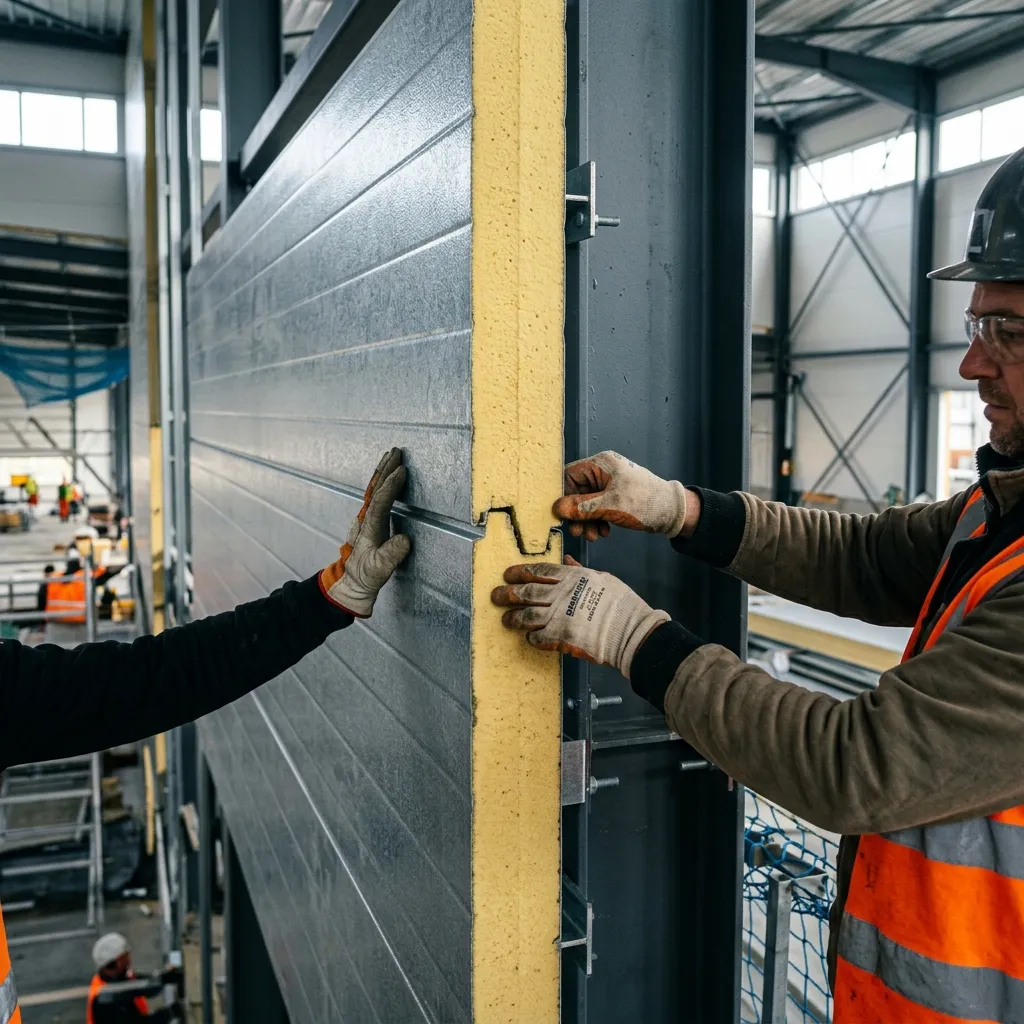
Polyurethane Foam (PUF) sandwich panels have become the backbone of modern temperature-controlled industrial construction in India. Whether you’re building a cold storage facility for agricultural produce, a pharmaceutical warehouse, a food processing plant, or a data center — PUF panels are almost certainly the right choice for your insulation and roofing system.
This guide covers everything: what PUF panels are, how they’re made, what specifications matter, which applications they serve best, and how to specify them correctly for your project.
1. What is a PUF Sandwich Panel?
A PUF (Polyurethane Foam) sandwich panel consists of three factory-bonded layers:
- Top Facing: Pre-painted Galvalume (GL) or Galvanized (GI) steel sheet — typically 0.40–0.50mm BMT
- Core: Rigid closed-cell Polyurethane Foam (PUF) — the insulating layer
- Bottom Facing: Pre-painted Galvalume or Galvanized steel sheet (same or slightly thinner)
The foam core is injected between the two steel skins under controlled conditions and chemically bonded during production, creating a monolithic composite with exceptional strength-to-weight ratio and thermal performance.
2. Why PUF Outperforms Other Insulation Systems
| Property | PUF Panel | Rock Wool Double Skin | Glass Wool Double Skin | EPS Panel |
|---|---|---|---|---|
| Thermal Conductivity (λ) | 0.022–0.024 W/mK | 0.034–0.040 W/mK | 0.032–0.038 W/mK | 0.035–0.040 W/mK |
| Compressive Strength | High (180–220 kPa) | Low–Medium | Low | Medium |
| Water Absorption | Very Low (<2%) | Medium | Medium | Low–Medium |
| Fire Rating | B2–B1 (with additives) | A1 (Non-combustible) | A1 (Non-combustible) | B2 |
| Installation Speed | Fast | Moderate | Moderate | Fast |
| Best For | Cold storage, precision temp control | Fireproof requirements | General industrial | Budget-sensitive projects |
Key takeaway: PUF panels provide the best thermal performance per millimeter of thickness, making them the most space-efficient insulation for cold storage and precision temperature-controlled applications.
3. Core Material — The Foam Quality Difference
Not all PUF panels are equal. The quality of the foam core determines actual thermal performance and longevity.
Foam Density
- Standard Grade: 38–42 kg/m³ — Suitable for most cold storage and industrial applications
- High Density: 42–48 kg/m³ — Recommended for deep freeze, high-traffic floors, and long-span roofing
- Light Grade: 32–35 kg/m³ — Avoid for temperature-critical applications; prone to shrinkage
Lambda Value (Thermal Conductivity)
- Target: ≤ 0.024 W/mK for high-performance panels
- Always request the Aged Thermal Conductivity value (tested after 180 days), as fresh foam performs differently from aged foam
Closed-Cell Content
- Should be ≥ 90% closed cells
- Higher closed-cell content = lower moisture absorption = better long-term thermal performance
Fire Retardancy
- Standard PUF is combustible (Class B2)
- Fire-retardant grade PUF with halogenated additives achieves Class B1 (self-extinguishing)
- For pharmaceutical plants and warehouses requiring fire ratings, specify FR-PUF panels explicitly
4. Available Thicknesses and Their Applications
| Panel Thickness | Thermal Resistance (R-value) | Recommended Application |
|---|---|---|
| 40mm | ~R-1.7 | Partition walls, mild climate separation |
| 60mm | ~R-2.5 | Industrial sheds, moderate climate control |
| 80mm | ~R-3.3 | Standard cold storage (2–8°C), fruit & vegetable stores |
| 100mm | ~R-4.2 | Cold storage (-5 to -18°C), frozen food stores |
| 120mm | ~R-5.0 | Deep freeze (-18 to -25°C), ice cream plants |
| 150mm+ | ~R-6.2+ | Blast freezing rooms, cryogenic applications |
5. Steel Facing Options
The steel skins on both sides of the panel are what you see and what protect the foam from the elements.
Galvalume (Recommended)
55% Aluminum + 45% Zinc alloy coating. Superior corrosion resistance and heat reflectivity. Ideal for exteriors and humid environments.
Galvanized
Zinc-coated. Economical. Suitable for interior panels or dry environments where corrosion is not a concern.
Paint Systems for Facings
- Polyester (PE): Standard exterior paint, 20–25µm topcoat
- PVDF: Chemical-resistant, UV-stable, recommended for food/pharma applications
- Food-grade white epoxy: Interior ceilings and walls in food processing plants
6. Panel Profile Types
Wall Panels (Flat / Micro-Ribbed)
Smooth or lightly textured surface for partition walls, cold room interiors, and clean-room walls. Hidden fastener systems available for a seamless appearance.
Roof Panels (Trapezoidal / Standing Seam)
Ribbed profile for structural rigidity and water drainage. Used as insulated roofing for industrial buildings and cold storage facilities.
Floor Panels (High-Density PUF)
Walk-in cold storage rooms require floor panels with high-density foam (48–60 kg/m³) to withstand fork-lift traffic and point loads. Often covered with stainless steel or aluminum anti-slip tread plates.
7. Key Applications in India
Cold Storage Facilities
The primary application for PUF panels in India. From individual chamber potato stores in Punjab and Haryana to large multi-chamber meat and poultry storage units, PUF panels maintain temperature integrity across the supply chain.
We supply PUF panels for cold storage projects across Haryana, Punjab, and Delhi NCR. View our cold storage solutions →
Pharmaceutical Warehouses
GDP (Good Distribution Practice) and WHO-GMP guidelines mandate temperature-controlled storage for drugs (typically 2–8°C or 15–25°C). PUF panel rooms with validated HVAC systems meet these requirements efficiently.
Food Processing Plants
Hygiene requirements demand smooth, non-porous interior surfaces that can be washed down. Food-grade PUF panels with white epoxy interior coating are the standard.
Poultry and Aquaculture
Controlled-environment poultry houses and fish hatcheries use PUF panels to maintain precise temperature and humidity for optimal growth conditions.
Data Centers
Server rooms require tight temperature and humidity control (18–27°C, 40–60% RH). PUF panel rooms provide excellent thermal stability and can be integrated with precision cooling systems.
8. Installation Best Practices
Correct installation is as important as correct specification. Poor installation can negate the panel’s thermal performance.
Joint Sealing
All panel-to-panel joints must be sealed with polyurethane foam sealant (not silicone) and covered with internal and external cover strips. Unsealed joints are the #1 source of cold room energy losses.
Fastening Systems
- Use insulated fasteners (plastic caps + stainless screws) to prevent thermal bridging
- Avoid direct metal-to-metal contact between panels and purlins where possible
Floor Slabs
Cold room floor slabs must have under-slab insulation (EPS or XPS boards, 50–100mm) to prevent ground heave from frozen soil and reduce floor heat gain.
Vapour Barrier
In high-humidity ambient environments, a vapour barrier on the warm side of the panel prevents moisture migration into the foam over time.
9. Specification Checklist for Buyers
Before ordering PUF panels, confirm these parameters with your supplier:
- ✅ Core density (kg/m³) — ask for the actual test certificate
- ✅ Thermal conductivity (λ value) — aged value, not fresh foam value
- ✅ Facing material and BMT — GL or GI, 0.40mm minimum for exterior panels
- ✅ Paint system — PE, SMP, or PVDF for exterior; food-grade for interior food applications
- ✅ Fire rating — B2 standard or B1 fire-retardant as required
- ✅ Panel dimensions — length, width, thickness, and joint type (tongue-and-groove or cam-lock)
- ✅ Load rating — especially for roof panels, confirm allowable span for your purlin spacing
Conclusion
PUF sandwich panels represent the most thermally efficient and cost-effective insulation solution for modern industrial construction. Selecting the right density, thickness, fire rating, and facing material for your specific application is critical to achieving your target temperature performance and long-term durability.
At Apex Metals, we supply high-quality PUF panels in 40mm to 120mm thicknesses, with Galvalume or GI facings in a full range of colors. Our technical team provides free project consultation, including panel thickness calculations based on your ambient temperature, internal set-point, and HVAC system.
📞 +91 99929 05050 | 💬 WhatsApp for PUF Panel Quote
Related Reading:
Technical Frequently Asked Questions
What is a PUF panel used for?
PUF (Polyurethane Foam) panels are used for thermal insulation in cold storage facilities, pharmaceutical warehouses, food processing plants, data centers, poultry farms, and any industrial building where temperature control is critical. They are also used as partition walls and roofing in clean-room environments.
What thickness PUF panel do I need for cold storage?
For standard cold storage (0–4°C): 80mm PUF panels. For deep freeze applications (-18°C to -25°C): 100–120mm PUF panels. For blast freezing rooms (-40°C): 150mm+ PUF panels. Always consult an insulation engineer for exact requirements based on ambient temperature and internal set-point.
What is the density of PUF panels and why does it matter?
Standard PUF panel core density is 38–42 kg/m³. Higher density (42+ kg/m³) panels offer better compressive strength, lower thermal conductivity (lambda value), and longer service life. Low-density panels (<38 kg/m³) are cheaper but have inferior insulation performance and may shrink over time.
How long do PUF panels last?
High-quality PUF panels from certified manufacturers typically last 20–30 years when properly installed and maintained. The steel facing (pre-painted Galvalume) protects the foam core from moisture and UV exposure. Panels should be inspected for joint integrity every 5 years.
Ready to Optimize Your Industrial Infrastructure?
Our technical experts specialize in creating customized steel and roofing solutions tailored to your project's unique requirements.